A country discovers the limits of its sovereignty only when its citizens are already running for shelter. A few days ago, in October 2026, Ukrainian officials reported disruptions to American early warnings of Russian ballistic missile launches, alongside restrictions on satellite communications that compromised the effectiveness of drones used to intercept incoming attacks. On October 25, President Volodymyr Zelenskyy announced that American missile warnings had fully resumed and Starshield, SpaceX’s service for government and national-security applications, performance had been restored. Although the problem might have been fixed, it revealed how a nation’s ability to use its weapons could depend on access to intelligence and communications that it could neither guarantee nor independently replace.
For Europeans, this should be an uncomfortable place to begin a discussion of strategic autonomy, but it is the perfect place to start if Europe is truly serious about becoming defensively independent. Military strength is reassuringly tangible when expressed in aircraft, missile batteries, and billions committed to procurement, because these are things that governments can announce and citizens can recognize. But the dependencies beneath them, and the ones that are truly important, are harder to see, because before an interceptor rises to the sky, a sensor needs to detect and warn an authorized commander about an incoming threat, in order for him to decide how to respond. When that chain spans across several borders, its effectiveness rests on agreements negotiated long before anyone hears an explosion.
The question Europe must now answer is how much of this chain it can sustain when American assistance is constrained, and the answer will determine how much responsibility Europeans can truly exercise over their own security. The answer begins upstream, where Europe may discover that the weapons are its own, but the decision to make them useful sometimes belongs to someone else.
A Continent (and an alliance) Under Pressure
Europe is entering an age of profound uncertainty, in which the cornerstones of its prosperity must be treated as strategic capabilities to secure, finance, and build. Reliable energy, critical raw materials, open trade routes, and military protection underpin almost every European ambition, from industrial renewal to technological leadership. However, the true control over these foundations is distributed among foreign suppliers, distant governments, and an American ally that has commitments across the entire world. For decades, the availability of these essentials allowed European governments to concentrate on distributing the benefits of security while postponing difficult decisions about its maintenance. Very often, critical investments became a matter for the next budget, the next government, or the next European program, while political attention gathered around disputes whose prominence bore little relation to their consequences for the continent’s survival.
Now, Europe faces a situation where it must finance the capacity it so foolishly delayed while risking remaining exposed to an ever-increasing threat landscape. Russia’s seizure and annexation of Crimea in 2014, its intervention in eastern Ukraine and its full-scale invasion in 2022 form a progression that European governments had years to assess, even as many continued to organize their economies and defense policies around the expectation that a wider confrontation could be avoided. Beyond the battlefield, NATO has identified Russian sabotage, cyber operations, electronic interference, and political influence against its members, extending the contest into infrastructure and institutions on which civilian life depends. In addition, China presents a different challenge through its industrial scale and its dominant position in processing many critical minerals, giving European manufacturers dependencies that cannot be replaced simply by choosing another supplier when relations deteriorate. Also, the competition for energy, water, and secure maritime access adds further pressure on the European continent, while the satellites supporting navigation, communications, and intelligence are themselves exposed to interference and cyberattacks. Even if we look within our borders, terrorism, failures of border management, and the political exploitation of irregular migration place additional demands on our governments, with proven examples of hostile states having deliberately facilitated migration towards European borders as an instrument of pressure for their own interests. All these above challenges have different causes, but they meet inside the same budgets, institutions, and societies, where distrust and political division can make sustained preparation harder to finance and collective action harder to organize. And although one could argue that yes, if Europe wants it has the capability to solve or mitigate the effect of each one of these challenges, but what is vastly overlooked, is that the strategic importance of these problems lies in the possibility that they will converge, leaving Europe to manage several emergencies with capabilities it had postponed building even for one of them.
That possibility should define how Europeans understand their relationship with the United States, which although remains our closest strategic ally, it cannot make its resources available everywhere at once. A major confrontation in the Indo-Pacific could coincide with Russian pressure in Europe, disrupted trade routes because of the Strait of Hormuz, and attacks on critical infrastructure, forcing Washington to divide intelligence assets, air defenses, logistics, and ammunition between places with urgent and competing needs. Such a situation would not necessarily require a single coordinated campaign against the West, since an adversary could exploit the distraction created by another conflict without sharing its objectives or timetable. Even an American administration firmly committed to European security would have to decide where scarce capabilities could make the greatest difference, and those decisions would be shaped by the consequences of failure across several regions. Europe must therefore prepare for circumstances in which America’s willingness to help exceeds its capacity to supply everything we might require. Under that pressure, Washington would need a strong and reliable partner capable of sustaining the defense of its own region, protecting the infrastructure on which its forces depend, and contributing to the wider effort without first requiring extensive American reinforcement. European autonomy is consequently a huge part of the work required to preserve a credible alliance, giving both sides of the Atlantic greater freedom to act when their commitments are tested simultaneously. It is about time that Europe rolls up its sleeves and lives up to the great legacy it so proudly inherits.
From Dependence to Sovereignty
Europe needs stronger capabilities across every military domain, from ammunition production and naval protection to cyber defense and the security of critical infrastructure. Within that broader effort, I am focusing this essay on the capabilities that come one step earlier in the sequence of military action, allowing a force to recognize a threat, coordinate its response, and influence what the adversary may do next. Inside the military industrial complex, planners describe the sequence of connecting the discovery of a target to its engagement and the assessment of the result as the “killchain”. The effectiveness of the killchain depends on several connected functions, since detecting an object does not necessarily mean we can know what it is, knowing its position does not automatically provide us with the permission to engage it, and possessing a weapon does not guarantee that we can feed it the information required to act. In European air and missile defense, these upstream dependencies deserve great attention, because they can limit the usefulness of the equipment that our governments have already purchased for decades.
Many Europeans would probably assume that we possess our own means of recognizing a ballistic missile attack against our territory. For a continent with sophisticated armed forces, advanced aerospace companies, and substantial financial resources, the ability to detect such an attack might even seem like an elementary part of our defense. However, our ground radars and national space assets do not amount to an autonomous operational system for persistent missile warning from space, leaving us dependent on American capabilities for an essential part of the earliest warning. I am going to say this one more time in hopes of getting your attention: We, Europeans, rely almost entirely on American technology for early warnings of missiles flying towards European territory. Now, this does not mean that Europe would necessarily remain unaware of an approaching missile without American assistance, since our radars can detect and track threats within their coverage. It just means that the timing and completeness of our warning can depend on infrastructure we do not control, which matters considerably when the interval available for assessment and response is already a very short one.
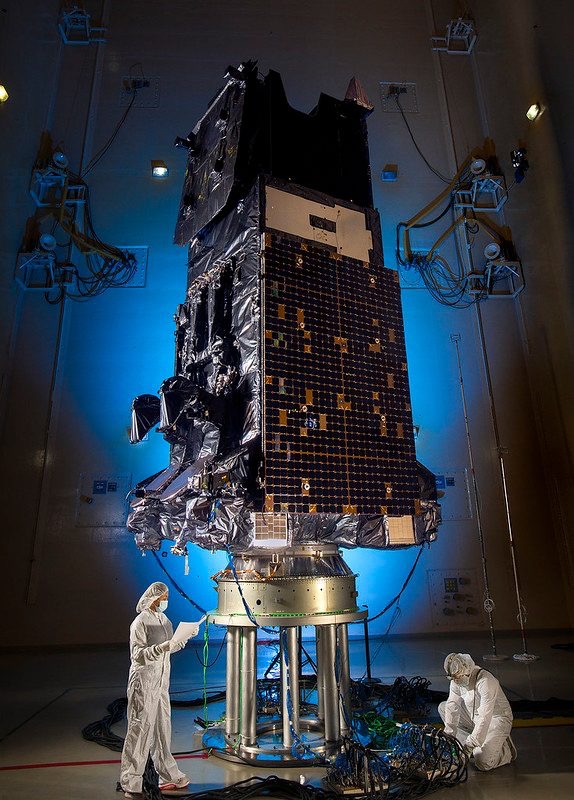
The reason why early warning is so crucial begins by understanding the difference between observing a launch and waiting for a missile to appear within a radar’s view. During powered flight, a ballistic missile’s rocket engine produces an intensely hot exhaust plume that emits infrared radiation, which allows specialized sensors in orbit to detect its signature against the background of the Earth and the atmosphere. The American Space Based Infrared System (Figure 1), also known as SBIRS, combines satellites and hosted sensors in different orbits with ground facilities that process their observations for such a cause. The way this system works is by having scanning sensors survey broad areas of the globe as an initial layer, while another layer called staring sensors, observes selected regions in the world more closely, and their data are transmitted to Earth for analysis and early warning. It is important to note that satellites that are in geostationary orbit move with the Earth’s rotation and therefore remain above the same region all the time, while sensors in highly elliptical orbits provide complementary coverage. On the other hand, ground radar works differently, transmitting radio waves and measuring the signals reflected by an object to determine its distance and direction, with repeated observations allowing its movement to be tracked. However, even our most powerful conventional ground radars cannot see through mountains or around the curvature of the Earth, so an approaching missile will remain outside their “view” during the initial part of its flight. Thus, by observing the launch from above, space sensors can provide warnings much sooner before a missile reaches a radar’s coverage, giving us additional critical time to alert authorities, prepare defensive units, and direct other sensors towards the threat.
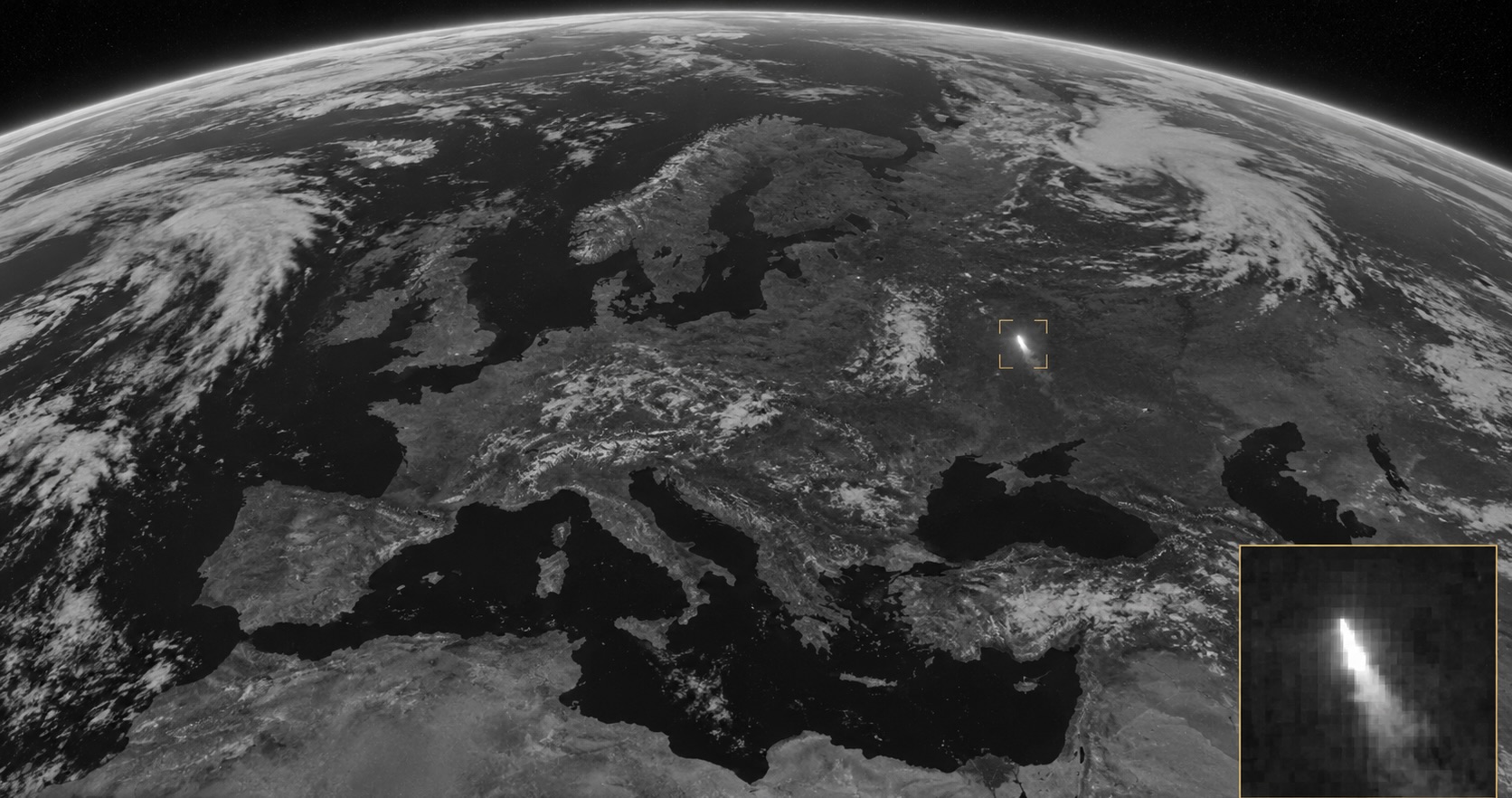
An initial launch warning is only a link in the chain of providing the continuous and accurate information needed to support a successful interception. Subsequent observations must help to establish the trajectory, assess what is threatened (the target of the missile), and determine whether an available weapon can engage successfully (while accounting for uncertainty as the situation changes by the second). Different types of threats also require different sensing arrangements, since a cruise missile or drone approaching close to the ground presents a different early detection problem from the rocket plume of a ballistic missile during ascent. France and Germany’s JEWEL initiative seeks to develop a European warning architecture connecting space sensors, ground radars, and command systems, but the creation of that service must have much more than placing a sensor in orbit. Coverage, processing, communications, trained personnel, and access to the resulting information must all be organized well together, including arrangements for periods when individual assets may become unavailable (in case of an attack by an enemy). The European industry already supplies important capabilities on which such an architecture could be built, such as ICEYE, a company founded in Finland, which operates radar satellites that can obtain imagery at night and through cloud cover, supporting reconnaissance when ordinary optical observation is limited or constrained. ICEYE’s work demonstrates that commercially developed European technology can make a military contribution, although radar imagery cannot substitute for the infrared sensors used to detect missile launches. Another crucial point to be addressed is how Europe will be able to protect its strategic and sovereign space-based assets, because in October 2026, analysts at the Center for Strategic and International Studies documented Russian military satellite Kosmos 2612 maneuvering towards the orbital plane and altitude of an ICEYE satellite, raising concerns about possible interference without establishing that an attack had occurred eventually.
Thus, Europe’s objective should extend beyond acquiring a small number of satellites for separate national purposes and towards building a European architecture capable of observing developments worldwide and maintaining persistent attention where threats are most consequential. Our requirement should be global reach combined with persistent warning, frequent observation of priority regions, and the ability to redirect collection as a crisis develops. The intervals between observations matter as much as the quality of an individual image, because military activity can change while a satellite moves elsewhere. European institutions already advocate greater use of public and commercial space data and stronger processing capabilities but translating that ambition into military utility needs dependable access, agreed priorities, and arrangements for sharing sensitive information (a complete alignment of doctrine).
Alongside observing the Earth, we must understand what is happening around our own spacecraft, distinguishing routine orbital activity from behavior that could threaten a service on which our forces depend. Other powers have already organized their armed forces around these responsibilities, with the United States establishing its Space Force as a separate military service in December 2019, giving space a dedicated institution responsible for organizing, training, and equipping forces. In September 2026, senior American officials also publicly acknowledged that the United States had deployed weapons in orbit, although their characteristics and operational scope remained undisclosed. Russia maintains Space Forces within its Aerospace Forces, while China placed its Aerospace Force directly under the Central Military Commission during its 2024 military reorganization. These structures are different, but each assigns military responsibility for a domain in which observation, communications, and the ability to interfere with an opponent’s operations increasingly overlap. We should recognize now how far this competition has already developed while Europeans continue debating the organization of capabilities on which our forces depend. Europe has national space commands, experienced operators, and capable industries, but responsibility for their collective military use remains divided among governments with different priorities.
A European space force would give participating governments a means to organize those capabilities around shared operational requirements, provided they were willing to assign it assets, personnel, funding, and authority. Its work would begin with maintaining a detailed understanding of activity around our spacecraft, assessing suspicious approaches, and coordinating responses with military and commercial operators. Protection would extend to ground stations and communications networks, with alternative links, spare capacity, and replacement arrangements prepared before disruption occurs. The force would also need options to counter hostile uses of space, including the ability to disrupt services supporting an adversary’s operations. Ground based electronic warfare and directed energy systems, including lasers capable of temporarily dazzling susceptible optical sensors, could contribute alongside spacecraft equipped to inspect and monitor threatening activity in orbit. These capabilities have different effects and limitations, since interfering with an optical sensor does not disable every satellite payload, and close approaches can themselves create uncertainty about intent. Controllable and reversible effects should receive priority where feasible, while destructive action carries the additional danger of creating debris that threatens our own infrastructure and other users of the same orbits. Developing these options would require governments to settle questions including who may authorize action, what evidence is required to identify hostile behavior, and which national assets remain available for collective defense when several countries need them at once; which are all discussions for a future topic.
Conclusion
Europe must first acquire the means to see the world on which its survival depends, with the reach to observe distant developments, the persistence to recognize an emerging threat, and the independence to obtain that knowledge when another power has different priorities. We cannot claim responsibility for our security while leaving essential parts of our awareness at someone else’s discretion, nor can we build an enduring presence in orbit without the capacity to protect it. Our ambition should extend from sovereign warning and intelligence to secure communications, resilient infrastructure, and a European space force empowered to defend the services our societies and armies require. Such an undertaking will demand resources, shared authority, and a long-term political commitment measured in decades, forcing us to decide how much we are willing to build for a future beyond our own terms of office. We have inherited a continent whose achievements still shape the world, but inheritance gives us no exemption from the work of securing its survival. We must undertake that work with the ambition to make Europe a power whose sight reaches beyond its borders and whose freedom rests on capabilities it can command.
The next chapter of European history should be ours to write, including above and beyond the Earth.